
By mylinkmonitor December 5, 2025
Many marketers and business owners find that reading a backlink report is like attempting to understand a language they were never taught. There are numbers all over the place, enigmatic terms like anchor text and domain authority, and lengthy lists of websites that don’t seem to be connected to your company. However, one of the most powerful signals influencing search engine rankings, credibility, and competitive power is backlinks.
Understanding your backlink report isn’t about becoming an SEO expert but about recognizing what strengthens your online presence and what quietly harms it. You can see the reputation of your website, its weaknesses, and the opportunities that are just waiting to be seized once you comprehend the narrative your backlink profile conveys. A quality backlink report is a guide, not a riddle.
Understanding your backlink report isn’t about becoming an SEO expert but about recognizing what strengthens your online presence and what quietly harms it. You can see the reputation of your website, its weaknesses, and the opportunities that are just waiting to be seized once you comprehend the narrative your backlink profile conveys. A quality backlink report is a guide, not a riddle.
What a Backlink Report Really Is

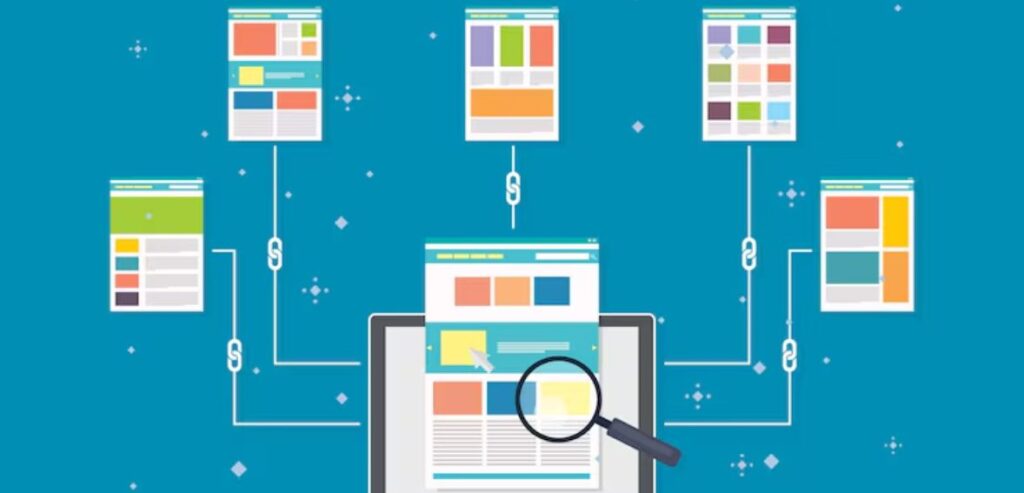
A backlink report is essentially a list of all websites that link to your website. These links are seen by search engines as indicators of authority, relevance, and trust. A backlink from a reliable website functions as a public endorsement, whereas one from a questionable source is more akin to a caution. The report’s objective is to demonstrate which endorsements enhance your reputation and which could jeopardize it.
Consider the report as a relationship map rather than a technical document. It shows who is discussing you online, how frequently, and in what context. It becomes much more intuitive when viewed through that lens. Tools built for beginners, such as a simple backlink checker, often make this relationship map easier to interpret by presenting the data more intuitively.
Understanding Link Quantity vs. Link Quality
A lot of newcomers think the objective is just to get as many backlinks as they can. In actuality, one powerful, authoritative link rarely has the same value as a hundred random links. You can distinguish between volume and impact with the aid of a backlink report. Reputable websites with actual audiences and editorial standards are typically the source of high-quality backlinks.
Link farms, spam directories, and automated placements are common sources of low-quality links. Both are highlighted in backlink reports, but not all links are worthy of recognition. The report is easier to understand once you accept that quality is more important than quantity. You start focusing on where and why your links originate rather than how many you have.
Domain Authority — Why This Metric Matters
Because it gives a quick indication of how strong or reliable a linking site seems, domain authority is frequently the first metric people see in a backlink report. It is a predictive score created by SEO tools to assess a domain’s likelihood of ranking highly, rather than a Google metric. Higher authority indicates that the website has gradually gained credibility through its own content and links.
When links from powerful domains appear in your backlink report, it indicates that your website is receiving valuable recommendations. Links from incredibly low-authority domains, on the other hand, might not improve your profile at all or even hurt it. Knowing domain authority enables you to distinguish between websites that improve your reputation and those that just take up space.
Page Authority — A More Specific Signal
Page authority concentrates on the particular page that links to you, whereas domain authority reports the reputation of an entire website. Even if a website is strong overall, the page that links to it may not be very important. Page authority indicates whether the link originates from a highly influential page or one with little activity.
A link from a website with a stronger domain but weaker internal pages may occasionally perform better than one from a page with a moderate level of authority. You can avoid making false assumptions by using this metric. You assess the actual impact of the page that directs visitors to your content rather than making judgments based only on the website name.
Anchor Text — The Words That Carry Weight
Search engines use anchor text, which is clickable text used in backlinks, to determine the topic of your page. These anchor phrases will be listed in your backlink report; it’s important to read them. The way actual people refer to your content is reflected in natural anchor text. Healthy linkage patterns are typically indicated by branded terms, URLs, and topic-related phrases.
Anchor text that is overoptimized, particularly when it contains repeated commercial keywords, can appear dangerous and manipulative. Unnatural anchor patterns may be a sign of spammy link-building or outside attempts to manipulate rankings in ways that search engines don’t like. It is simpler to understand the meaning and intent of anchor text when it is viewed as a linguistic fingerprint.
Linking Domains vs. Total Backlinks

The distinction between the overall number of backlinks and the number of connecting domains is a frequent source of misunderstanding. If one website connects to you fifty times, your total backlinks grow by fifty, but you still only have one connecting domain. Getting connections from 10 different websites is usually more effective than getting hundreds from the same one, since search engines like variety over repetition.
Once you know what to look for, backlink reports make these differences quite evident. Knowing this enables you to focus on outreach and content initiatives instead of chasing volume from single sources to achieve more unique domains.
Toxic Links — What They Mean for You
Potentially harmful links, also known as toxic or spam links, are highlighted in every backlink analysis. These originate from low-quality websites designed only to trick search engines. Your rankings won’t be negatively impacted by a few harmful connections, but cumulative trends may damage confidence. You may determine whether your website is being targeted by spam or badly done link-building by reading this section of the report.
Strange anchor language, inappropriate material, or unconnected geographic locations are common characteristics of toxic connections. The first stage is to identify them; the second is to decide whether or not to reject them. Even if not every harmful link needs to be addressed, being aware of them might help you preserve your long-term health.
Country and Language Relevance
A backlink report frequently contains regional and language data. You may use these insights to determine whether your target market and backlink profile are compatible. Even while the backlinks are technically valid, their relevancy may be in doubt if your company primarily targets a U.S. audience and the majority of your backlinks are from foreign, non-English websites.
Links that make sense in context are given priority by search engines. Links from languages or nations unrelated to your company may weaken the theme of your profile. This helps you determine how relevant or detached your backlink footprint may be from your real audience, but it does not imply that such links are harmful.
Contextual Relevance of Linking Pages

Topic relevance is one of the most crucial yet often disregarded components of a backlink assessment. A backlink from a page that discusses your subject is more valuable than one that is put at random in an irrelevant context. Links from websites or pages with content-related topics that appear in your backlink report are beneficial for both SEO and credibility.
Search engines may handle links that originate from unrelated topics with caution. Relevance aids search engines in understanding your brand’s characteristics and identifying if your authority is derived naturally or artificially.
Follow vs. Nofollow Links
Follow and nofollow links are distinguished in backlink reports. Nofollow links indicate that the connecting website does not directly support your page, whereas Follow links transmit authority. Both are valuable, but for different reasons. While nofollow links offer exposure, reputation, and referral traffic, follow links increase your ranking potential.
A natural combination of both is part of a good backlink profile. Artificial link building may be indicated if you notice an abnormally high number of follow links with the same anchor text. Knowing this balance lets you assess your profile objectively and avoid misunderstandings.
How Competitor Comparison Helps You Read Your Report
Competitor comparisons, which indicate how your link profile stacks up against others in your field, are typically included in backlink reports. This aids in determining the significance of your advancement. Your approach could need to be modified if your rivals have more balanced anchor patterns, greater authority sites, or much more distinct domains.
Comparing your stats to those of your competitors helps put them in context. Until you compare them to industry norms, numbers by themselves don’t signify anything. Knowing where you stand keeps you from being overconfident and shows you where you can close the gap.
Spotting Patterns That Predict Ranking Moves

Changes in search rankings are frequently anticipated by backlink patterns. Your exposure may gradually grow if you observe an increase in relevant, high-quality connections. Rankings may stagnate or drop if poisonous or irrelevant connections build up.
It’s important to read patterns rather than discrete data. You may determine whether your SEO approach is improving or deteriorating by looking at backlink data, which shows directional momentum. Over time, you start to see the report as a story of risk or progress rather than just as facts.
Why Referral Traffic Matters in Backlink Reports
Backlinks are useful for more than just SEO; they may increase the number of actual visitors to your website. The traffic linked to each link is frequently mentioned in backlink reports. You can receive a lot of referral traffic from well-known websites with a large readership. Referral visits frequently convert better than search traffic, so this is important.
Prioritizing future collaborations and content initiatives is made easier when you know which backlinks result in actual consumers. On paper, certain linkages could seem strong, but they don’t generate much interaction. Others can have a little power but a lot of traffic. Smarter outreach can be guided by reading these findings.
Backlink Freshness and Why It Matters
Over time, backlinks get stale. A page that no longer ranks or receives traffic may be the source of a link that was effective five years ago. You can determine if your authority stems from current endorsements or outdated references by looking at backlink reports, which display the age of your connections.
New links show continued relevance. It could be time to update your content strategy if your report indicates stagnation. Knowing how fresh your backlinks are helps you avoid becoming overconfident and keeps your momentum going.
How Backlink Reports Reveal Brand Reputation Trends
Backlinks reveal how your brand is seen online. Trust is shown by positive remarks from reputable websites. Links from unsafe websites might suggest weakness or unfavorable connections. You can see how your brand story is changing online by routinely examining your backlink report.
You could see new collaborations, media attention, or natural recommendations from groups that like your work. One of the few SEO tools that indirectly reveals sentiment trends is backlink reports. They can assist you in developing a more comprehensive branding plan when they are understood subtly.
Reading Reports Without Overreacting to Noise
Backlink reports are full of noise, such as esoteric references with minimal weight, out-of-date pages, and a few spam links. It’s simple to mistake them for serious threats. Differentiating noise from problems that actually need attention is crucial.
You eventually figure out which indicators are important and which are just background noise. You may avoid needless tension and concentrate on important trends by taking a cool, collected approach. When you examine trends, context, and direction instead of chasing every detail, the report becomes more understandable.
Turning Insights into Practical Strategies
Taking action is the issue when you understand your backlink report. The study identifies opportunities to take advantage of, flaws to fix, and strengths to build upon. You can produce more material that is in line with the attributes that draw high-quality connections. You may modify your outreach and SEO strategy by identifying detrimental trends.
The report serves as a decision-making compass, guiding relationship development, content production, and long-term plan improvement. When you read it clearly, understanding becomes measurable progress. Once you understand what kinds of links matter, you can begin thinking about how to get backlinks that reinforce your site’s credibility and reach.
Conclusion — Turning Data Into Direction
A backlink report is not meant to confuse you; it is meant to guide you. When viewed through a human-centered lens, it becomes a narrative of your website’s credibility, relationships, and momentum. Understanding its components allows you to see how others view your site and where it stands within your digital ecosystem.
It reveals strengths you can amplify and weaknesses you can address. Most importantly, it gives you control over your SEO direction. Once you learn to read a backlink report without getting lost, you transform data into clarity, clarity into strategy, and strategy into growth.
FAQs
How can I determine which backlinks are most important?
Pay attention to links with natural anchor text that come from reputable, relevant websites. They usually have a greater impact on rankings than volume alone.
Should I be concerned about my report’s toxic links?
Only when hazardous connections exhibit obvious manipulation tendencies or show up in sizable groups. Search engines frequently overlook isolated spam links.
In a backlink report, what is the largest warning sign?
Unnatural anchor text patterns are recurring in several domains. This often indicates ineffective link-building or efforts at ranking manipulation.
How frequently should my backlink report be reviewed?
Monthly for ongoing SEO initiatives and quarterly for long-term tracking. Individual changes are less important than trends.
Can a backlink report help create new content ideas?
Yes. Your strongest backlinks reveal which topics naturally attract attention, helping shape future content with higher link potential.
Leave a Reply